
If you’re wondering, “Can Invisalign fix overbite in Bloomingdale and Naperville, IL?”. Invisalign can fix overbites. Clear aligners can move teeth and guide your bite. At Star Smiles Orthodontics and Pediatric Dentistry, we make the process clear and simple.

What Is an Overbite?
An overbite is when the top front teeth cover the lower front teeth too much. A small overlap is normal. A deep overlap can cause bite problems. It may lead to tooth wear, jaw pain, or speech issues. It can also affect your smile and confidence. According to Dr. Adelina Fontes Das, a leading orthodontist in Avon and Torrington, CT, early evaluation helps prevent enamel wear, jaw strain, and speech issues tied to deep overbites.
How Invisalign Treatment Helps
Invisalign uses a set of clear aligners. Each set moves the teeth a small step. Over time, these steps add up. Teeth straightening happens in a safe, planned way. Bite correction is part of the plan.
- The trays fit snug on your teeth.
- Some trays have bite ramps to help reduce heavy front contact.
- Small tooth-colored “attachments” can add grip and control.
- Elastic bands may guide jaw alignment when needed.
With steady wear, aligners can improve overbites, crowding, and other teeth misalignment issues. Your orthodontist will choose the right mix of tools to match your needs.
Braces vs. Invisalign
Both braces and Invisalign can correct an overbite. The best choice depends on your case.
- Braces use brackets and wires to move teeth.
- Invisalign uses clear aligners that you remove to eat and brush.
- Braces may be best for very complex cases.
- Aligners fit well for many mild to moderate cases.
We will review treatment options at your consultation. We will explain the pros and cons in plain words. Your goals, lifestyle, and compliance all matter.
Why Patients Like Aligners
- Aesthetics: Clear trays are hard to see.
- Comfort: No sharp brackets or pokey wires.
- Convenience: Remove aligners for eating and brushing.
- Hygiene: It is easier to keep good oral hygiene with aligners.
- Fewer food limits: You can enjoy most foods after you take trays out.
Patient comfort supports better compliance. Better compliance supports better results.
Our Technology and Imaging
Our clinic uses digital scans and 3D imaging. There are no messy molds. Scans capture your bite from many angles. This helps us plan precise tooth movement and bite correction. We use imaging to set a safe treatment timeline. We also use it for progress checks and adjustments.
- Digital scans improve fit and comfort. According to Dr. Marty Greenberg, a friendly orthodontist in Jacksonville, FL, scans help make trays fit snug and cut the chance of sore spots.
- Imaging helps us see the jaw, teeth roots, and bite.
- We can spot challenges early and edit the plan if needed.
Who Is a Good Candidate?
- Mild to moderate overbites are often a good fit for Invisalign.
- Severe overbites may need more tools or braces.
- In a few adult cases, jaw surgery is the best path.
- Teens and adults can both do well with aligners if they wear them as told.
At your first appointment, we will do a full assessment. We will check your bite, your jaw, and your smile. Then we will outline your best treatment options.
Your Consultation and Treatment Plan
Your orthodontic care starts with a friendly consultation. We will:
- Review your goals and health history.
- Take scans, photos, and bite records.
- Explain the treatment process and expectations.
- Share a custom treatment plan and treatment timeline.
- Go over cost, insurance, and payment plans.
You will see a step-by-step plan before we start. You will also get a clear estimate and choices for financing.
The Treatment Process
- Plan and scans: We study your scans and set a precise plan for tooth movement and bite correction.
- First aligners: You receive your first sets of aligners. We show you how to place, remove, and care for them.
- Steady wear: Wear aligners 20–22 hours per day. Take them out only for eating, hot drinks, and brushing.
- Progress checks: We schedule follow-up visits to track progress, fit, and comfort. Some check-ins may be virtual for added convenience.
- Adjustments: If we see a setback or new challenge, we adjust the plan. Small changes can keep your timeline on track.
- Finishing phase: Late-phase trays polish contacts. We aim for even bite contacts and a stable result.
- Retainers and retention: When we finish active care, we fit retainers. Retention holds your new bite and helps prevent relapse.
Treatment Timeline and Progress
Many overbite cases take 9 to 18 months. Some finish faster. Some take longer. Time depends on severity, age, bone response, and elastic wear. Good habits protect your timeline and cost.
- Most patients change trays every 7 to 14 days.
- We see you about every 8 to 12 weeks.
- We adjust this based on your progress and comfort.
We will update your timeline at visits so you always know what to expect next.
Daily Care and Oral Hygiene
- Wear: Keep trays in for 20–22 hours per day.
- Eating: Remove aligners to eat. Drink only water with trays in.
- Care: Rinse trays often. Brush them with cool water and mild soap. Avoid hot water.
- Hygiene: Brush and floss after each meal before you put trays back in.
- Speech: A slight lisp may show at first. It fades as you adapt. Reading out loud helps.
Retainers After Invisalign
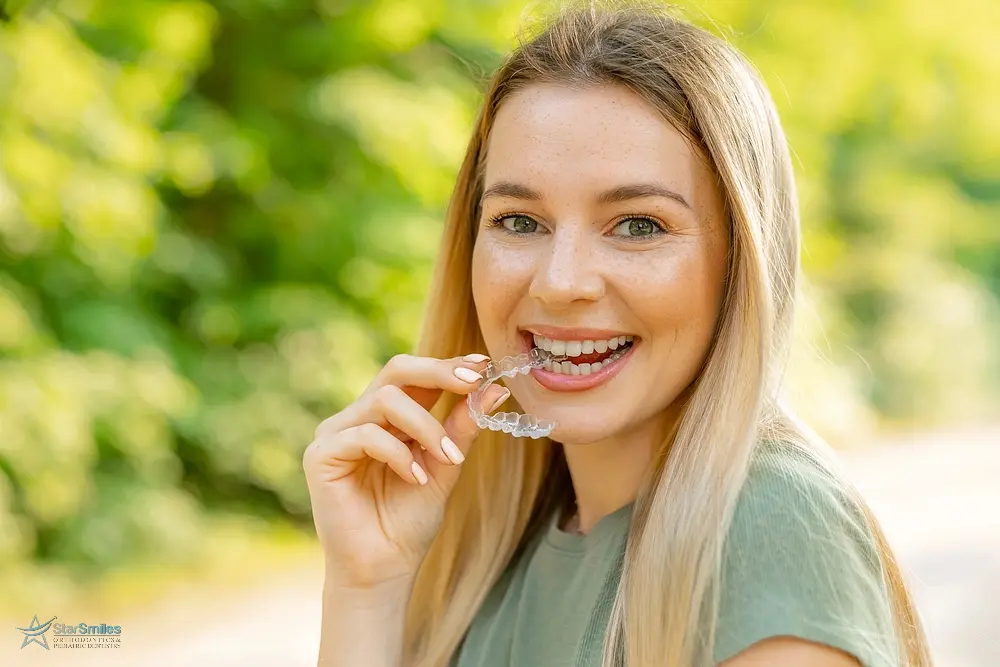
Retainers keep teeth in place while bone sets. They protect your results.
- Full-time wear at first.
- Then most patients switch to night wear.
- We will set a plan that fits your case.
- Come in for follow-up if a retainer feels tight or loose.
Good retainer wear keeps your new smile and bite stable for the long term.
Cost, Insurance, and Payment Plans
Cost varies by case and treatment length. We will review fees at your consultation. You will get a clear written estimate.
- Many plans include some orthodontic care.
- We will help you check insurance benefits.
- HSA and FSA funds can lower out-of-pocket cost.
- We offer payment plans and financing with monthly options.
We aim to make care fit your budget and your life.
Why Choose Star Smiles Orthodontics and Pediatric Dentistry
- Locations: We serve Bloomingdale and Naperville, IL. Choose the location that fits your routine.
- Expertise: Our team has advanced training in orthodontics and pediatric dentistry.
- Patient care: We focus on patient comfort and quality care at every step.
- Technology: We use modern scans and imaging to improve fit and results.
- Convenience: Flexible scheduling and friendly reminders help you stay on track.
We also work with your family dentist. If you plan cosmetic steps after treatment, we can coordinate care. This team approach helps you meet your smile goals.
What to Ask at Your Appointment
- Is Invisalign right for my overbite?
- Will I need attachments or elastic bands?
- What is my treatment timeline?
- How often are follow-up visits and adjustments?
- How will you monitor progress?
- What are my total costs and payment options?
Bring your ID, insurance card, and any past X-rays. We will take scans and start your plan.
Start Today
Ready to see if Invisalign can fix your overbite? Set a consultation at our Bloomingdale or Naperville clinic. We will check your bite, do scans, and explain your treatment plan. You will learn about cost, insurance, financing, and payment plans. We will answer all your questions so your expectations are clear.
Take the first step toward a healthy bite and a great smile. Book your appointment with Star Smiles Orthodontics and Pediatric Dentistry today. We are here to guide you with kind, expert orthodontic care.
About the Authors
Dr. Andre Correia Jham – Orthodontist in Bloomingdale and Naperville, IL
Dr. Adelina Fontes Das – Orthodontist in Avon and Torrington, CT
Frequently Asked Questions
Can Invisalign actually fix an overbite?
The process might take a bit longer than fixing simple alignment issues, but many people have seen fantastic results. Of course, every smile is unique, so it’s best to chat with your dentist or orthodontist to see if Invisalign is the right choice for your specific overbite situation.
Can you negotiate Invisalign prices?
While Invisalign prices are often set by individual providers, there’s usually some wiggle room for negotiation. Don’t be shy about discussing costs with your orthodontist or dentist. They might offer discounts for paying in full upfront or have flexible payment plans available.
How to get Invisalign for free?
First, check if your dental insurance covers orthodontic treatment – some plans do! If you’re a student, see if your school’s dental program offers discounts or free treatments. Don’t forget to look into clinical trials or research studies in your area; they sometimes provide free orthodontic care.